
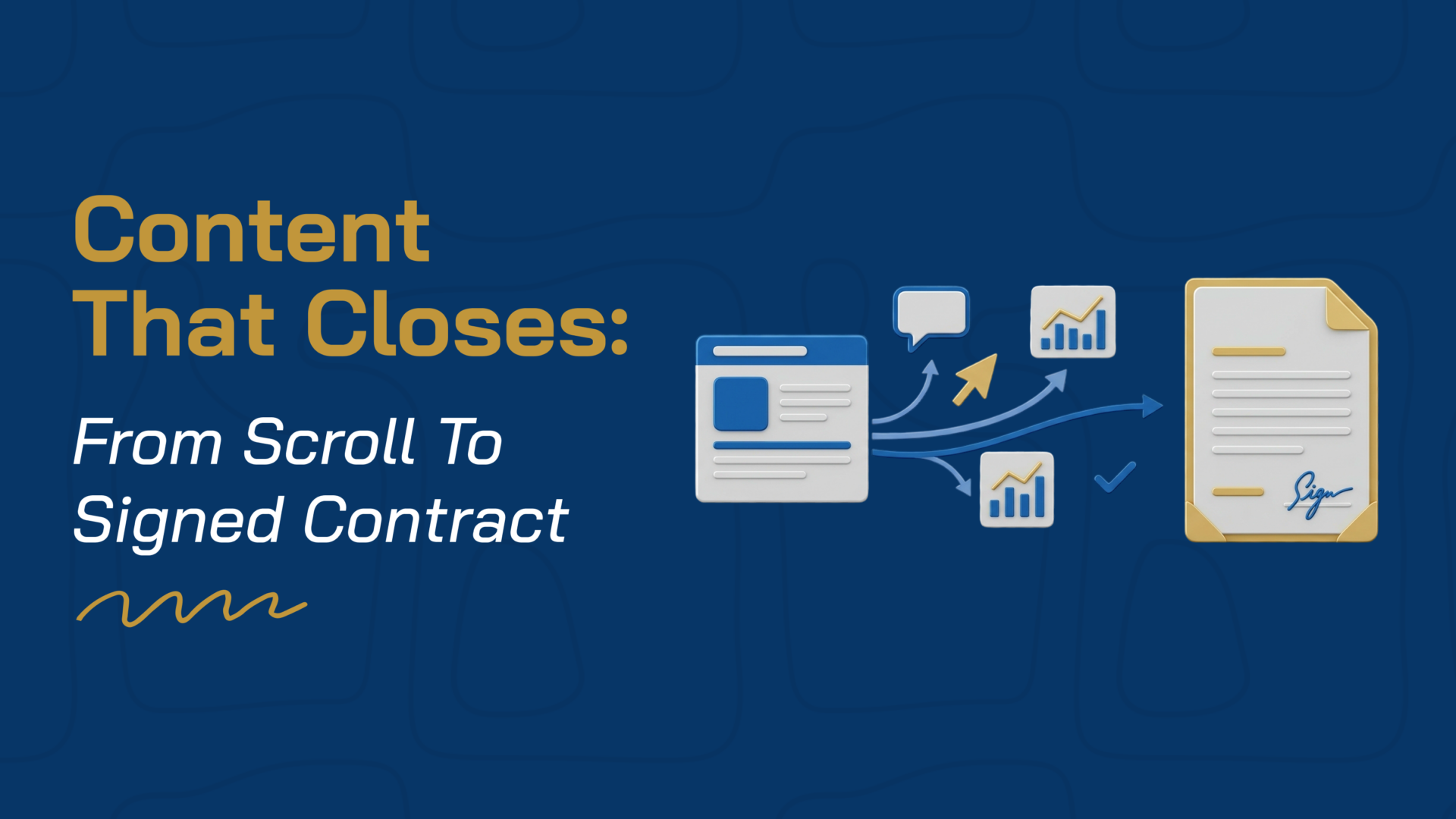
B2B content has a problem.
Businesses are producing more of it than ever, but producing more content doesn't necessarily mean generating more leads.
A LinkedIn post can get plenty of engagement. A blog can attract hundreds of visitors. A video can receive thousands of views. But when marketing budgets are being reviewed, the more important question is whether that activity is contributing to the sales pipeline.
For B2B businesses, particularly those with complex products, longer sales cycles and multiple decision-makers, content needs to do more than keep a brand visible.
It needs to help potential customers move towards a buying decision.
As businesses enter Q4 and start looking more closely at budgets and growth targets for the year ahead, this distinction becomes particularly important. Content creation shouldn't be positioned as something a business does simply because it needs to "stay active" online. It should be treated as part of the wider commercial strategy.

Why Most B2B Content Doesn't Generate Leads
The issue with B2B content isn't necessarily that businesses aren't creating enough of it. In many cases, the problem is that content is created without a clear understanding of what it is supposed to achieve.
A typical content calendar might include company announcements, industry awareness days, product posts, team photographs, promotional graphics and the occasional blog. All of these can have a role, but if the strategy stops at keeping the calendar full, there is a risk that content becomes an output rather than a business tool.
Research from the Content Marketing Institute's 2025 B2B research found that 74% of B2B marketers said content marketing helped generate demand or leads, while only 49% said it helped generate sales or revenue. The research also identified aligning content with the buyer journey as one of the challenges marketers continue to face.
This highlights an important difference between content that gets attention and content that supports conversion.
A potential customer doesn't usually see one post, click a link and immediately sign a contract. Especially in B2B, there can be weeks or months of research, comparison and internal discussion before a decision is made.
Your content needs to support that process.
Understand What Your Buyer Needs to Know
Before creating content, businesses should understand what potential customers are actually trying to find out.
A buyer might initially be trying to understand whether they have a particular problem. Once they recognise the problem, they may start researching possible solutions. From there, they may compare suppliers, investigate costs, look for evidence of previous results and try to establish whether a company can actually deliver what it promises.
Gartner's research describes the B2B buying journey as a collection of different buying tasks rather than a simple linear funnel. Buyers may need to identify a problem, explore solutions, build requirements, select a supplier, validate their choice and create agreement internally before they are ready to purchase.
That means a strong content strategy needs to answer different questions at different points in the journey.
The content that attracts someone who is discovering a problem for the first time shouldn't necessarily be the same content used to convince a procurement team that your business is the right supplier.
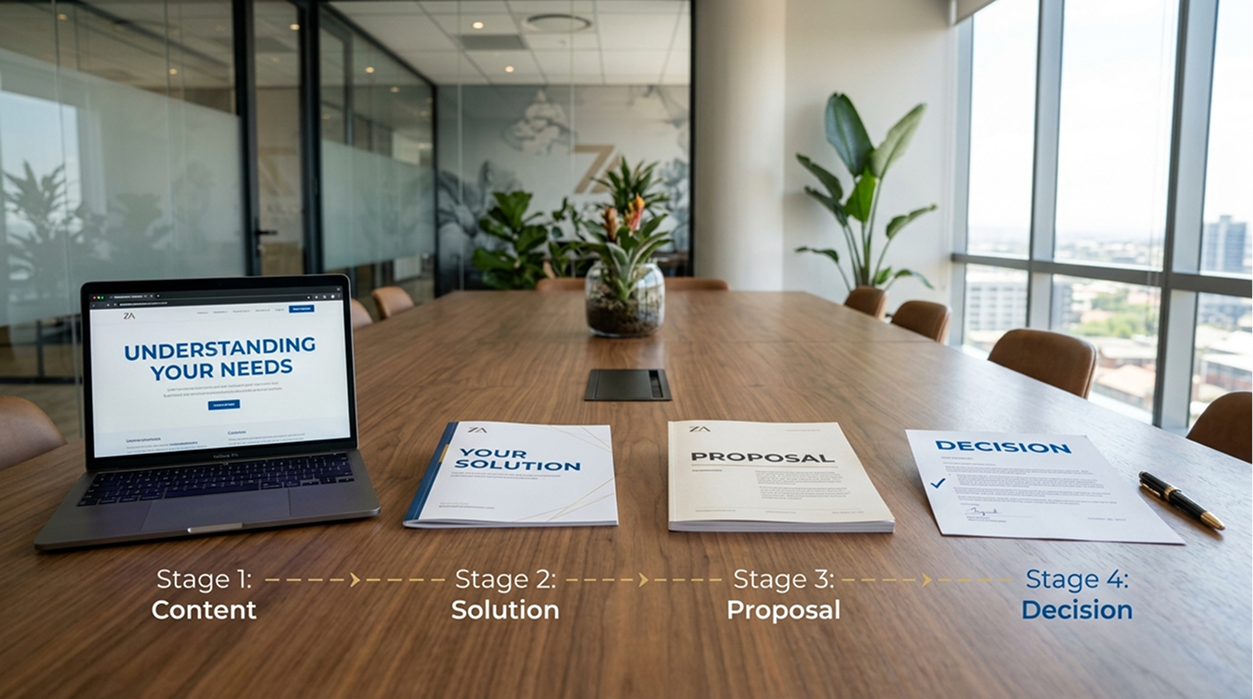
Create Content for Every Stage of the Buying Journey
At the awareness stage, potential customers are often looking for information rather than a supplier. Educational blog posts, industry insights, social media content, videos and thought-leadership pieces can help businesses introduce themselves while demonstrating a genuine understanding of the challenges their audience faces.
The aim at this stage isn't necessarily to generate an immediate enquiry. It's to become a useful source of information and establish credibility with the right audience.
As the buyer moves into the consideration stage, the questions become more specific. They may want to understand which solutions are available, how different approaches compare and what they should consider before making a decision. This is where product and service pages, comparison content, guides, FAQs, webinars and more detailed educational resources can be valuable.
The content should help the buyer evaluate their options rather than simply telling them that your business is the best.
Further down the buying journey, the focus shifts towards proof and risk reduction. Case studies, testimonials, customer results, certifications, technical information and detailed explanations of your process can help a potential customer understand what working with your business actually looks like.
At this point, the buyer isn't simply asking, "Can you solve this problem?"
They're asking, "Can I trust you to solve it?"

Your Content Should Support Your Sales Team
One of the most valuable ways to think about B2B content is as an extension of the sales process.
Your sales team is already answering questions from potential customers every day. Those questions can become some of your most useful content opportunities.
If prospects regularly ask how implementation works, create content that explains it. If they want to understand the difference between two solutions, create a comparison. If they need evidence that your service works, develop a case study. If there are common concerns around pricing, timelines or processes, address them clearly.
This gives sales teams useful resources to share with prospects and lets potential customers keep researching between conversations.
It also helps create consistency between marketing and sales. Instead of marketing communicating one message and sales having to explain it differently later, both teams are working from the same useful, customer-focused information.
Measure Content Against Business Goals
If content is being positioned as a commercial tool, the way it is measured needs to reflect that.
Likes, comments, impressions and views can provide useful information about reach and engagement, but they don't tell the entire story.
B2B businesses should also be looking at metrics such as qualified leads, cost per lead, website enquiries, conversion rates, content-assisted conversions and the number of opportunities influenced by marketing activity.
Attribution can be difficult, particularly when a B2B customer interacts with a business several times before making contact. A buyer might read a blog, follow the company's LinkedIn page, return to the website, download a guide and speak to a sales representative before eventually becoming a customer.
That doesn't mean the earlier content had no commercial value.
It means content needs to be evaluated as part of the wider buying journey.
Content Should Start With the Sales Conversation
One of the easiest ways to improve a B2B content strategy is to start with the questions your sales team is already hearing.
- What do prospects ask before requesting a quote?
- What objections come up repeatedly?
- What information do decision-makers need before approving a purchase?
- What makes customers hesitate?
- What do existing customers wish they had known before choosing a solution?
These questions can provide a much stronger foundation for content than simply looking at what competitors are posting.
When content is based on real customer questions and real sales conversations, it becomes more relevant to the people the business actually wants to attract.
It also becomes easier to connect marketing activity to commercial objectives.
Best Practices for Implementing B2B Content Marketing
Why doesn't most B2B content generate leads?
B2B content often fails when it is created without a clear business objective. Content focused only on engagement may attract attention without helping potential customers understand their needs, evaluate solutions or move towards a buying decision.
What type of content works best for B2B lead generation?
It depends on where the buyer is in their journey. Educational blogs and industry insights can attract potential customers, while comparison guides, FAQs, product information, case studies and testimonials can help buyers evaluate options and build confidence.
How does content support the B2B buyer journey?
Content can answer the questions buyers have at different stages, from understanding a problem to evaluating solutions and selecting a supplier. Educational content builds understanding, while solution-focused and proof-based content helps buyers compare options and build confidence.
How can B2B content support the sales team?
Content can help sales teams answer common questions, address objections and support conversations with potential customers. Questions about pricing, implementation, processes and results can also provide useful content ideas.
How should B2B businesses measure content marketing?
Alongside engagement metrics such as views and impressions, businesses can track qualified leads, enquiries, cost per lead, conversion rates and content-assisted conversions. These metrics help show how content contributes to the wider buying journey.
From Scroll to Signed Contract
The journey from seeing a piece of content to signing a contract rarely happens in one step. But every useful interaction can help move a potential customer further along that journey.
Content can introduce a business to the right audience, help someone understand a problem, explain a solution, demonstrate expertise, provide evidence and answer the questions that stand between interest and action.
That's what makes content commercially valuable.
The goal isn't simply to create more posts, publish more blogs or increase the number of pieces going out each month.
The goal is to create content that helps the right people make the right decision.
At Famous Digital Media, we help B2B businesses create strategic content that supports their marketing and sales objectives, from content planning and creation through to digital strategy and performance measurement.
Because great content shouldn't just get people to stop scrolling.
It should give them a reason to take the next step.
Is your content generating engagement, or helping generate pipeline?
Famous Digital Media can help you build a B2B content strategy around your audience, buying journey and commercial goals, creating content that attracts the right people, supports your sales process and helps turn interest into opportunity.